 Healthy
How to Size Your Meals Without Tracking Every Single Bite
The Hidden Friction of Calorie Tracking
Logging food into an app can be an eye-opening exercise for a few days. It shows where energy hides, especially in cooking oils, dressings, and sugary beverages. But for many people, turning every meal into an arithmetic problem quickly wears thin. Weighing raw chicken breasts, scanning barcodes, and searching community databases for homemade stew turns dining into data entry.
Beyond the mental fatigue, the numbers themselves are far less exact than they appear on a smartphone screen. Federal guidelines allow food labels a margin of error of up to 20 percent on reported calorie values. Calorie counts on restaurant menus often miss the mark by similar margins. When you add individual variations in gut microbiota and digestive efficiency, strict digital logging begins to feel like false precision.
When an eating strategy demands flawless record-keeping, a single busy week can derail the entire process. The goal of sensible weight management is not perfect bookkeeping. It is finding a durable way to eat reasonable amounts of nourishing food without feeling exhausted by the process.
The Visual Plate: A Reliable Everyday Framework
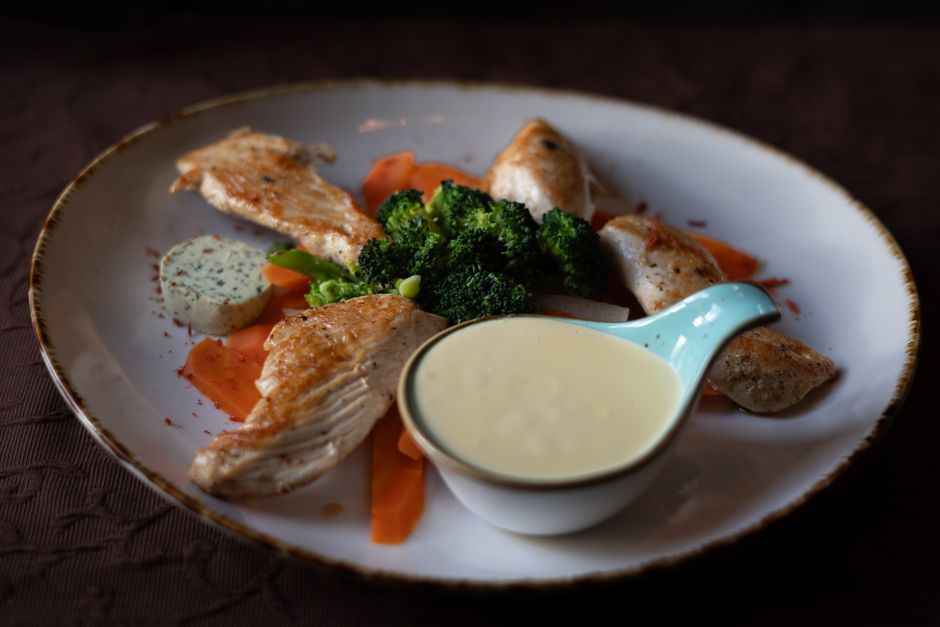
You do not need a digital food scale to serve a balanced, moderate meal. The most dependable visual tool is an ordinary dinner plate, roughly nine inches across. Instead of obsessing over grams, you simply divide the surface area into clear categories.
- Half the plate: Non-starchy vegetables or salad greens. Broccoli, spinach, peppers, green beans, cabbage, or mixed greens. These provide fiber, water, and micronutrients that fill the stomach physically while keeping overall energy density modest.
- One-quarter of the plate: Protein. Chicken breast, salmon, tofu, eggs, lean beef, or tempeh. Adequate protein supports muscle maintenance and prompts the release of satiety hormones that keep hunger quiet between meals.
- One-quarter of the plate: Complex carbohydrates. Brown rice, sweet potatoes, quinoa, whole-wheat pasta, or beans. This quarter gives your brain and muscles readily usable fuel without crowding out essential nutrients.
Finish the meal with a modest amount of fat used during cooking or served on top—such as a splash of extra-virgin olive oil, a wedge of avocado, or a sprinkle of toasted seeds. This simple layout works for dinner at home, a quick lunch, or even at a catered buffet.
Using Your Hand as a Portable Measuring Tool
When you are dining out, eating from a takeout container, or packing lunch for the office, your hands serve as an intuitive measuring guide. The best part is that hand size correlates fairly well with your body frame, naturally scaling portions up or down to fit you.
The Palm for Protein
A serving of protein should match the thickness and surface area of your palm, excluding your fingers. For most women, this equals one palm-sized portion per meal; for many men, two palms make sense. This generally lands between 20 and 40 grams of protein.
The Fist for Vegetables
Aim for a portion of dense vegetables or salad that matches the size of your closed fist. Since non-starchy produce is rich in fiber and relatively low in energy density, one to two fists per meal is a sensible target.
The Cupped Hand for Starches and Grains
For cooked grains, root vegetables, legumes, or whole fruit, a cupped hand serves as a practical measure. One cupped hand delivers roughly 20 to 30 grams of carbohydrates, which fits neatly into an active lifestyle without overloading digestion.
The Thumb for Healthy Fats
Fats are energy-dense, meaning a small volume carries significant fuel. Use the length and width of your thumb to gauge butter, oils, nut butter, and hard cheeses. One thumb represents roughly a tablespoon.
The 20-Minute Delay: Giving Fullness Cues Time to Land
Portion control is not just about what lands on the plate; it is also about how quickly that food disappears. The biological communication between your stomach and your brain relies on chemical messengers such as cholecystokinin (CCK) and peptide YY. These signals take anywhere from 15 to 20 minutes to reach the brain's satiety centers.
When you inhale a meal in five minutes while rushing through emails, your stomach does not have adequate time to tell your nervous system that you have received enough fuel. You end up finishing your plate and immediately searching the pantry for something more, simply because the hormonal response is still catching up. You can read more from MedlinePlus (National Institutes of Health).
Slowing your pace can resolve this lag without extra willpower. Putting your fork down between bites, chewing thoroughly, and taking a sip of water during the meal gives your natural feedback loops time to register fullness before you reach for seconds.
Kitchen Setup: How Environment Shapes Your Intake
Willpower is a finite resource, especially at the end of a long workday. Designing your immediate environment to support reasonable eating works far better than relying on sheer discipline.
Consider where food is served. When serving dishes sit in the middle of the dining table, taking a second or third helping requires almost zero thought. Your hand moves while you are talking, and you consume another half-portion without noticing. By plating meals directly from the stove or kitchen counter and leaving the cookware behind, going back for more becomes a deliberate, conscious choice.
Eating without screens is another quiet game changer. When your attention is glued to a television episode or social media feed, eating shifts into background processing. Studies consistently show that distracted eaters consume more during the meal and report feeling hungry sooner afterward. Eating at an actual table with your screen in another room allows the brain to catalog the meal as a real, satisfying event.
Adapting Visual Portions to Mixed Meals and Dining Out
A common question is how to handle foods that do not divide neatly into quarters—such as hearty chilis, stir-fries, noodle bowls, or restaurant entrees. Visual portions still apply, with minor adjustments.
For mixed dishes, look at the dominant component. In a stir-fry, make sure vegetables and lean protein make up the bulk of the pan before adding noodles or rice. If a restaurant serves an oversized pasta dish, you can visually divide the bowl in half before taking the first bite, boxing the remainder up for lunch the following day.
At social gatherings, start by filling half your plate with whatever raw vegetables, grilled greens, or fresh fruit are available. Once that baseline is set, use your palm guide for whatever protein is being served, and treat rich dips or sauces like thumb-sized accents. You participate fully in the meal without feeling trapped by restrictions.
Consistency Over Precision: The 12-Month View
The real secret of healthy weight management is staying power. A strict, number-heavy tracking routine that lasts for three weeks produces short-term swings that rarely stick. By contrast, an approximate, visual approach that you can easily maintain across holidays, vacations, and busy work weeks compounds over months and years.
Some meals will naturally be larger than others. Some days will include birthday cake or an extra slice of pizza. That variation is a normal part of life, not an emergency that requires drastic restriction the next morning.
By anchoring your routine in the plate method, using your hands as an intuitive guide, and eating with undivided attention, you build a sustainable relationship with food. You get to enjoy your meals without turning dinner into homework.
Frequently asked questions
Can I really lose weight without counting calories?
Yes. Weight loss depends on an ongoing energy deficit, which can be created through visual portioning, prioritizing lean protein, and eating plenty of high-fiber vegetables. Many people successfully manage weight by shifting food quality and plate composition without logging numbers.
What if I am still hungry after finishing my balanced plate?
Wait about 15 to 20 minutes before deciding to eat more, giving fullness hormones time to reach your brain. If you are genuinely hungry after that window, add another palm of protein or another fist of non-starchy vegetables.
Does the plate method work if I follow a plant-based diet?
It adapts well to plant-based eating. Fill half your plate with colorful vegetables, assign one quarter to plant proteins like tofu, tempeh, or edamame, and reserve the remaining quarter for whole grains like brown rice or farro. If using lentils or beans, they provide both protein and complex carbohydrates.
Should athletes or highly active people use the same hand guidelines?
People with high daily energy expenditures or intense training schedules generally need additional fuel. They often do well by increasing the carbohydrate portion to two cupped hands per meal and adding an extra thumb of healthy fat.